

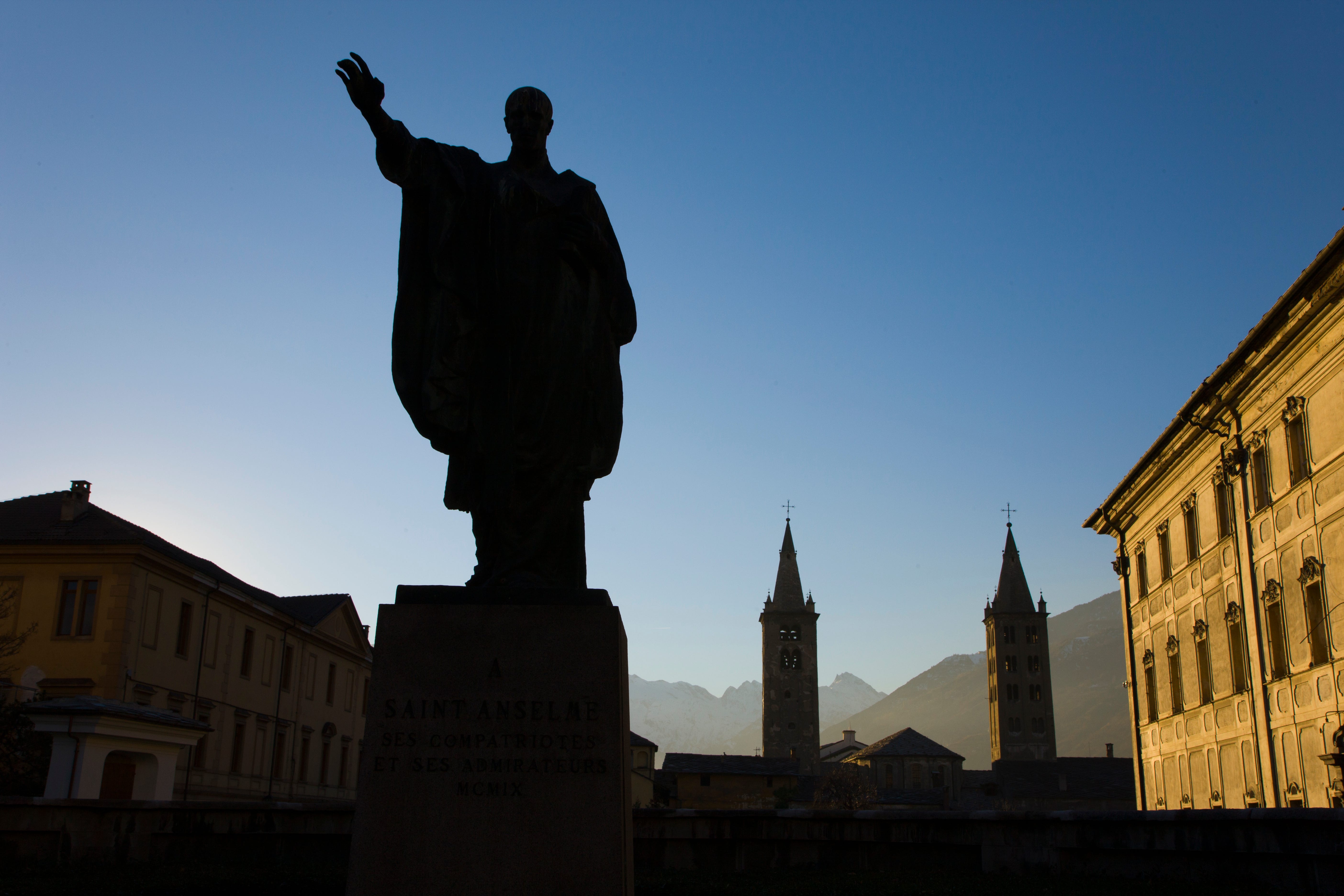
What is Anglicanism? The historic answer is simpler than current debates suggest. Mere Anglicanism is Reformed catholicity: Protestant in its teachings and catholic in its connection to the ancient church. By “mere” I do not mean minimal or watered-down. I use the word as C.S. Lewis did, the thing itself, pure and simple, nothing more and nothing less. The English Reformers did not view Protestant and catholic as opposing ideas, but as truths that belong together. Their goal was to recover biblical Christianity, pure and simple, as the early Church Fathers understood it.
I had assumed that church history between the apostles and the Reformers was largely marked by decline.
My appreciation for Reformed catholicity grew while studying early church history at Westminster Theological Seminary. I had assumed that church history between the apostles and the Reformers was largely marked by decline. Engaging with the writings of Athanasius, Augustine, Anselm, and Aquinas changed my perspective. I began to see the Reformation in continuity with the ancient church. The church fathers became real influences, living family, not distant figures. Herman Bavinck’s Reformed Dogmatics additionally clarified how one could be thoroughly Reformed while drawing on patristic and medieval sources.1 Bavinck opened my eyes to voices I had ignored and gave me a lens to appreciate them. I later recognized this balance as organic to Mere Anglicanism.
The English Reformers: Faith of the Ancient Church
Cranmer, Jewel, and Hooker argued that the Church of England was returning to the faith of the ancient church.2 Rome had innovated; Canterbury was recovering. Jewel’s Apology challenged Rome to show any doctrine of the English church that contradicted Scripture or the teaching of the first six centuries. Jewel was adamant: “We have planted no new religion but only have renewed the old that was undoubtedly founded and used by the apostles of Christ and other holy fathers in the primitive church.”3 The Thirty-nine Articles affirm the ecumenical creeds and the first four councils. The Book of Common Prayer places the Apostles’ and Nicene Creeds at the heart of worship. Cranmer understood that liturgy forms belief; we become what we pray.
…four voices from the ancient and medieval church help shape my understanding of Reformed catholicity.
During my historical journey, four voices from the ancient and medieval church helped shape my understanding of Reformed catholicity. Their lives stretch from Nicaea to the height of the medieval period. Each shaped a doctrine central to biblical faith: the Trinity, salvation, atonement, and the nature of God. Through this, I came to recognize that Mere Anglicanism receives truth gratefully, submits everything to Scripture, and remembers that tradition serves the Word, not replaces it (2 Timothy 3:16).
Athanasius: Trinitarian Grammar for Anglican Worship
The Thirty-nine Articles begin where theology must begin: before we can talk about grace, atonement, or knowing God, we need to know who God is. Athanasius of Alexandria helped establish this foundation. By defending Nicene orthodoxy, he gave the church the Trinitarian language that Anglican worship uses every Sunday.
Arius claimed that the Son was a created being, the first and greatest of God’s works, but not truly God. If Arius had won, Christianity would have become a form of paganism, worshiping a lesser god instead of the eternal Son who shares the Father’s nature. At the Council of Nicaea in 325, the church declared that the Son is homoousios, “of the same substance,” as the Father. Athanasius spent his life defending this truth, enduring five exiles for his faith. While others wavered, he stayed firm.
He became what we are that we might become what he is.
In On the Incarnation, Athanasius argues that only God can save. If the Son were merely a creature, he could not bridge the gap between God and creation. As Athanasius writes,"He became what we are that we might become what he is.”4 Christ’s full divinity is essential. Anglican Christianity stands on this. The Thirty-nine Articles affirm the Trinity in Athanasius’s terms. The Prayer Book includes both the Nicene and Apostles’ Creeds. When I recite the Nicene Creed each Sunday at Church of the Holy Cross, I think of Athanasius. Article 8 reminds us the three creeds “ought thoroughly to be received and believed: for they may be proved by most certain warrants of Holy Scripture.”5 This captures Reformed catholicity: creedal orthodoxy grounded in biblical authority.
Augustine: The Gravity of Sin and Sufficiency of Grace
You have made us for yourself, and our hearts are restless until they rest in you.
If Athanasius secured the doctrine of the Trinity, Augustine shaped the doctrine of salvation. The Thirty-nine Articles are thoroughly Augustinian on human nature, sin, and grace. Augustine’s theology emerged from his conversion. As he recounts in the Confessions, he spent years pursuing wisdom through philosophy, entangled in sin, unable to free himself. When God broke through, Augustine understood that salvation was entirely God’s work. As he wrote, “You have made us for yourself, and our hearts are restless until they rest in you.”6 I recognize my own story in Augustine’s.
Against Pelagius, Augustine argued that sin is a deep corruption affecting the whole person. We cannot even desire God unless He acts first (John 6:44). Grace is not assistance for the willing; it overcomes rebellion and creates faith where there was only spiritual death. Election is unconditional, and perseverance is God’s gift.
The Anglican Articles reflect this. Article 9 describes original sin as the “fault and corruption of the Nature of every man.”7 Article 10 says we can do no good “without the grace of God by Christ preventing us.”8 Article 17 affirms predestination as “the everlasting purpose of God.”9 This is Augustinian theology in Anglican form. Augustine’s influence reaches the Prayer Book, too. Cranmer’s collects acknowledge human weakness and our need for grace. The General Confession admits, “there is no health in us.”10 Like Augustine, Cranmer understood that honest confession opens the heart to grace.
Anselm: Devotion and Rigor at Canterbury
Behind the Anglican understanding of atonement stands Anselm of Canterbury, who holds a unique place in Anglican heritage. As Archbishop of Canterbury from 1093 to 1109, he is not merely a theological influence but an ancestor. Canterbury’s lineage runs through him. The English Reformers did not claim to be creating a new church but reforming the existing English church, the same church Anselm once led.
I do not seek to understand in order to believe, but I believe in order to seek to understand.
To start, his motto, fides quaerens intellectum, does not begin with an argument but with a prayer, a posture Mere Anglicanism inherits. He prays, “I do not seek to understand in order to believe, but I believe in order to seek to understand.”11 For Anselm, theological reflection is worship, love for the God who has revealed himself. When he formulates his ontological argument, defining God as “a being than which nothing greater can be conceived,”12 he addresses God directly. Whatever we make of the argument, its prayerful posture reminds us that theology begins in worship.
In addition, Anselm's Cur Deus Homo, "Why God Became Man," developed the satisfaction theory of atonement. His core insight endured: sin demands what humanity cannot give; only Christ's sacrifice suffices (Hebrews 10:12). The Reformers refined this into penal substitution, as Article 31 declares: "The Offering of Christ once made is that perfect redemption, propitiation, and satisfaction, for all the sins of the world, both original and actual; and there is none other satisfaction for sin, but that alone."13 Anselm laid the foundation; the Reformers established the doctrine.
Aquinas: Philosophical Categories Under Scriptural Authority
Now Aquinas presents a gift and a challenge. Where Athanasius secured Trinitarian orthodoxy, Augustine the doctrine of grace, and Anselm atonement theology, Aquinas shines as a philosopher of being. Engaging Aquinas well requires discernment, and Bavinck again proves helpful.
To be clear, the concern is this: Aquinas assumes autonomous human reason can establish certain truths about God apart from special revelation. According to Aquinas, these “preambles of faith” form a foundation upon which revealed theology builds.14 For those of us shaped by Van Til, this grants fallen reason an autonomy it doesn’t have. Augustine himself taught that sin affects not only the will but also the mind.15 The Reformers understood this as the corruption of reason by sin: we cannot reason our way to true knowledge of God without Scripture's light (Romans 1:21-22).
The criticism stands, but Bavinck offers a path through. The Reformation adopted natural theology but incorporated it into the doctrine of faith rather than treating it as a preamble.16 The Reformers insisted that reason must be renewed by faith. When it is, Aquinas's profound categories help sharpen our doctrine of God. The Prayer of Humble Access models this posture: we do not ascend to God trusting in ourselves, but He reaches down to us in mercy.
Absolute simplicity belongs to God alone.
Divine simplicity. God's eternity. These are Thomistic categories in service of biblical teaching, not autonomous reason (Exodus 3:14). In Question 3 of the Summa Theologica, Aquinas argues that God is altogether simple, without body or parts, “Absolute simplicity belongs to God alone.”16 More specifically, God is not a collection of attributes; He is His attributes. When we call God omnipotent, omniscient, and omnipresent, we are describing one undivided Being, not naming separate parts.
Article 1 of the Thirty-nine Articles reminds us: God is "without body, parts, or passions; of infinite power, wisdom, and goodness.”17 Hooker engaged Aquinas this way, drawing on the scholastic method while maintaining Scripture’s authority. His Laws of Ecclesiastical Polity demonstrated that reason, though fallen, could serve theology when subordinated to revelation. When subordinated to Scripture, Aquinas's categories sharpen our doctrine of God.
Mere Anglicanism as Reformed Catholicity
Long ago, my girlfriend (now my wife) and I walked into The Falls Church in Virginia and began an unexpected journey into Anglicanism. We grew in faith together. We made our marriage covenant there. Our daughters were baptized into the covenant community there. To our delight, what we discovered was not a blend of Protestant and Catholic, but a recovery of something older: Mere Anglicanism.
Orthodox beliefs and ancient tradition, biblical authority and the creeds, Reformed teaching and liturgical worship.
I recognize that to claim Athanasius, Augustine, Anselm, and Aquinas as Anglican voices may seem presumptuous, but the English Reformers made this claim precisely. They saw themselves as recovering the ancient faith that Rome had obscured. This is Mere Anglican lineage. When we need a foundation for the Trinity, Athanasius helps us. When we want to understand sin and grace, Augustine teaches us. When we want to combine deep thinking with real devotion, Anselm leads us. When we want to think carefully about God’s nature, Aquinas sharpens our minds. Mere Anglicanism brings these together: Orthodox beliefs and ancient tradition, biblical authority and the creeds, Reformed teaching and liturgical worship.
Therefore, I take confidence: we are heirs of the ancient tradition, not orphans. Mere Anglicanism is not the via media understood as theological compromise, splitting the difference between Wittenberg and Geneva. Nor is it Anglo-Catholicism dressed in Protestant language. It is a distinct tradition: catholic in its continuity with the ancient church, Reformed in its commitment to Scripture alone as the final authority. This is Mere Anglicanism: Reformed catholicity in practice, pure and simple.
S.D.G.
Herman Bavinck, Reformed Dogmatics, ed. John Bolt, trans. John Vriend, 4 vols. (Grand Rapids: Baker Academic, 2003-2008).
John Jewel, An Apology of the Church of England, ed. Robin Harris and Andre Gazal (Landrum, SC: Davenant Press, 2020).
Jewel, Apology.
Athanasius of Alexandria, On the Incarnation, 54.
Thirty-nine Articles of Religion, Article 8.
Augustine of Hippo, Confessions, I.1.
Thirty-nine Articles of Religion, Article 9.
Thirty-nine Articles of Religion, Article 10.
Thirty-nine Articles of Religion, Article 17.
The Book of Common Prayer (1662), General Confession.
Anselm of Canterbury, Proslogion, 1.
Anselm of Canterbury, Proslogion, 2.
Thirty-nine Articles of Religion, Article 31.
The term praeambula fidei is used by later Thomists to describe Aquinas’s position. See Summa Theologica, I, Q. 2, Art. 2.
Augustine of Hippo, Confessions, VII.18-21. ↩
Thomas Aquinas, Summa Theologica, I, Q. 3.
Thirty-nine Articles of Religion, Article 1.
This is a good and helpful summary. As a fellow Anglican, I thank you. I would only differ on one point and that has to do with your critique of Thomas Aquinas. I was not shaped by Van Til. I do not think Thomas would say that reason is ever autonomous, since it is the same God who both creates and reveals. Our reason may be fallen but we can know something regarding natural law and the virtues because God created us with reason and shows forth himself and his world in common grace. That reason to be sure is fallen but is not wholly gone, and does become clearer when we are in Christ. Even Paul acknowledges this at the beginning of Romans. I am writing this “off the cuff” so I am not sure I am saying exactly what I mean.
John Henry Newman would disagree. After failing to find the via media, he converted and ultimately wrote a book you should read: "Apologia Pro Vita Sua."
Eamon Duffy would disagree, as he explains what was done by the Anglican reformers to the Catholic worship of the English people in "The Stripping of the Altars."
Your grasp of Aquinas would benefit from reading the Summa. Thomas is applying Aristotle's realism (confidence in human common sense) to matters of theology. It sounds like Van Tilian has created a straw man, because Thomas does not grant fallen reason any more reliability than it can handle in its fallen nature. More reading! Original sources! Always better!