

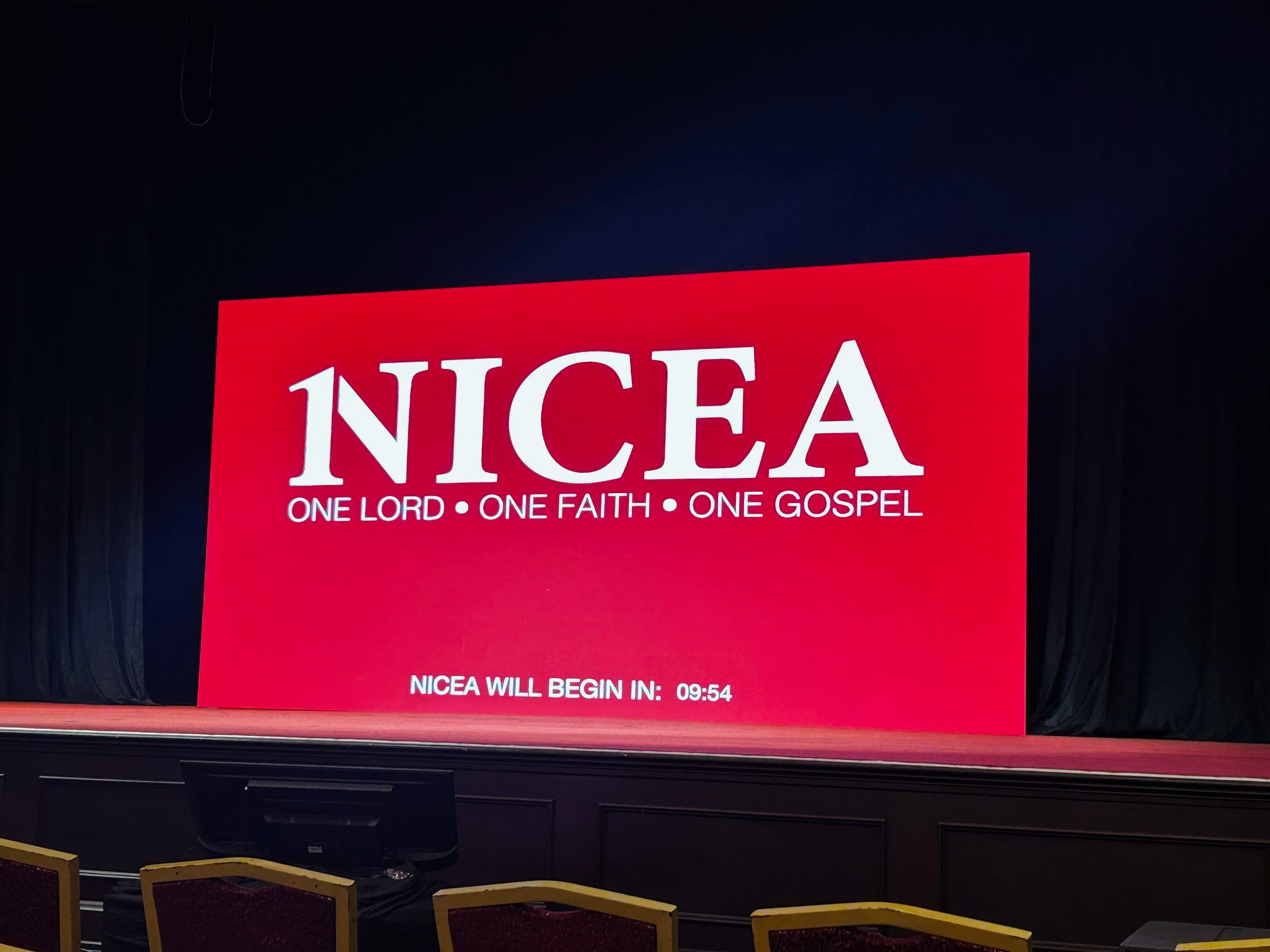
I’m writing this from Istanbul, Turkey, where I’m attending a conference celebrating the 1700th anniversary of the Council of Nicea with Christians from all over the world. I’m including a few pictures from the tour of the seven churches of Revelation with Enjoy Tours.
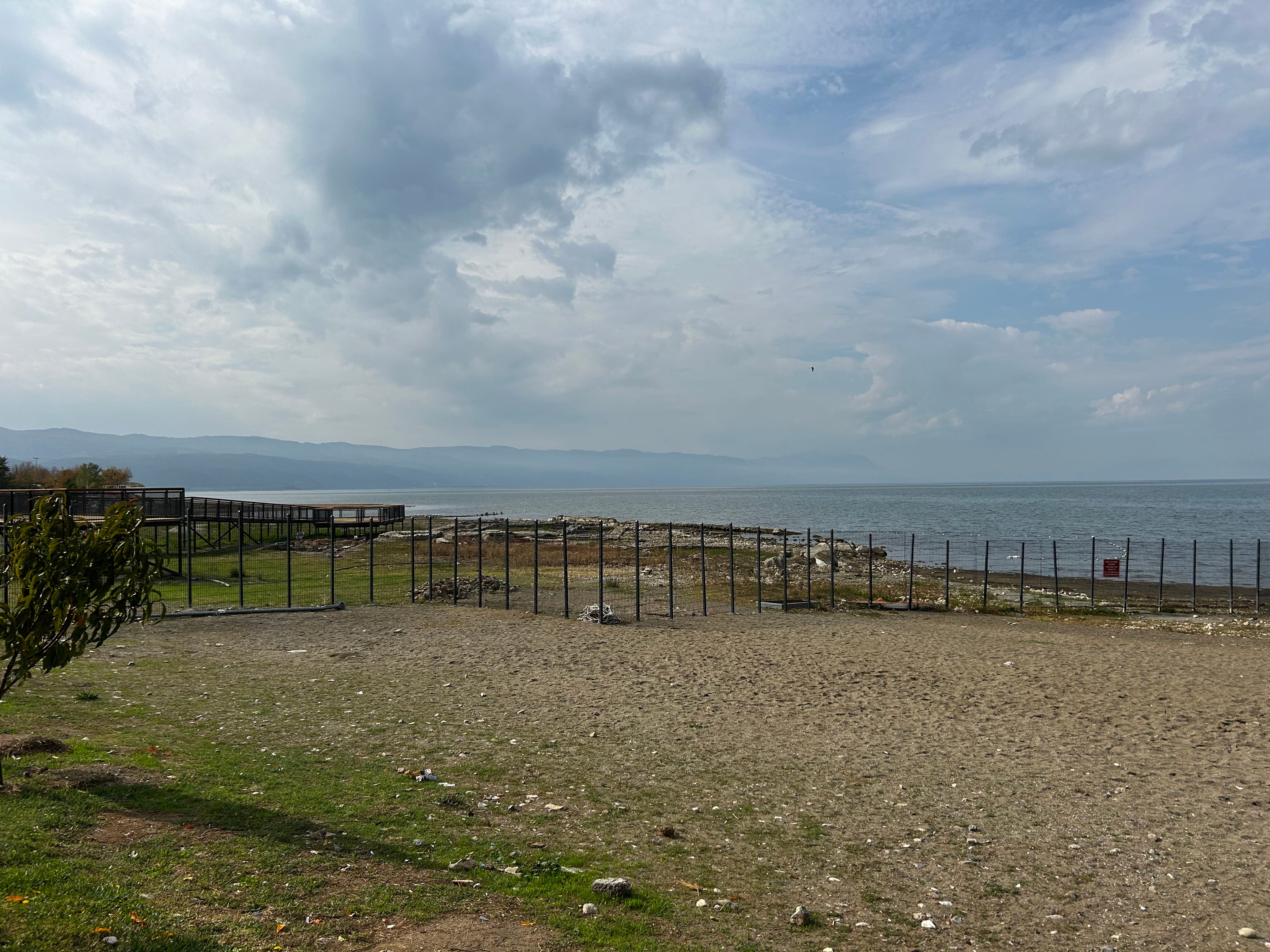
Yesterday, we toured Iznik, the ancient city of Nicea, where I had the privilege of standing near the place where the church fathers gathered in 325 AD to clarify the orthodox faith. It seems fitting to launch this publication here.
So let me begin with this: Why does a fourth-century creed matter for thinking about theology, technology, and everything in between?
The Creed as Foundation
Creeds are concise doctrinal statements that define Christian orthodoxy. They don’t add to Scripture but faithfully summarize its teaching on essential matters: who God is, who Christ is, and what the gospel accomplishes.
The Nicene Creed has served this function for nearly 1,700 years. It isn’t just a historical artifact. It’s a declaration of reality. When the church fathers gathered at Nicea, they weren’t inventing new theology. They were retrieving, clarifying, and affirming what Christians had always believed about the triune God and His relationship to creation.
The opening line sets everything else in motion:
“We believe in one God, the Father Almighty, Maker of heaven and earth, and of all things visible and invisible.”
Notice what this does: it establishes that God is Creator, not an abstract principle, not a product of material processes, but the sovereign Maker who brought forth all things ex nihilo, from nothing, by the power of His word.

This echoes what Paul wrote to the Colossian church:
“For by him all things were created, in heaven and on earth, visible and invisible, whether thrones or dominions or rulers or authorities—all things were created through him and for him. And he is before all things, and in him all things hold together.” (Colossians 1:16-17)
The Necessary Presupposition
This declaration of God as Creator is not simply one worldview option competing with others. It’s the necessary starting point for all knowledge.
The Latin word credo means “I believe.” The Creed doesn’t start with proof; it starts with a presupposition of a Trinitarian God. Christian epistemology is based on this doctrine of God. It’s the starting point for understanding everything else. As the psalmist declares, “The fear of the Lord is the beginning of wisdom” (Psalm 111:10). Not the middle, not a helpful addition, but the beginning.
There’s no possibility of neutrality. We either begin with the self-attesting Christ of Scripture or we begin with autonomous human reason. We either acknowledge that all facts are created and interpreted by God, or we suppress this truth and attempt to interpret reality on our own terms (Romans 1:19-25).
Van Til argued that the Trinity is the foundation of all human predication. Vern Poythress elaborates by showing in his book, Redeeming Science, how the problem of the one and the many underlies every domain of human knowledge, including mathematics, linguistics, and scientific classification. Unity and diversity, the one and the many, find their ultimate resolution not in abstract Greek philosophy but on the triune God as He has revealed Himself in Scripture.
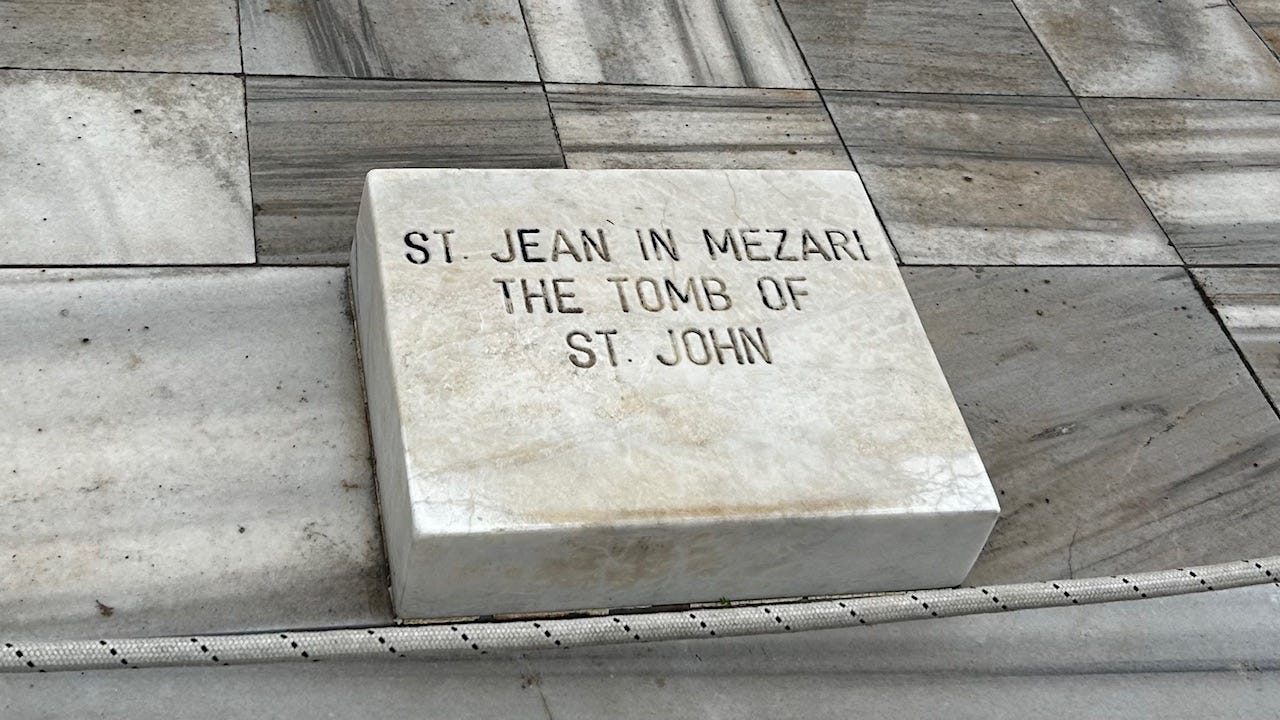

The Apostle John understood this when he wrote his prologue. He took the Greek philosophical concept of the Logos, their abstract principle of rationality and order, and revealed its true identity in the person of Jesus Christ: “In the beginning was the Word, and the Word was with God, and the Word was God. All things were made through him, and without him was not any thing made that was made” (John 1:1,3). The Father, Son, and Holy Spirit exist in eternal relationship, and it is this God who created all things from nothing. Our ability to reason, to discover, to create, to make sense of a world, depends entirely on this truth.
About the Name
When I decided to start “Credo Ex Nihilo”, I knew the name had to capture something essential about my worldview. In terms of the title, I’ll confess upfront: it’s not proper Latin. But it expresses what I’m after: belief anchored in the God who creates from nothing. The title joins two foundational Christian convictions. “Credo” (I believe) opens the Nicene Creed. “Ex nihilo” captures the doctrine that God created all things from nothing, implied in the creed’s affirmation of God as “Maker of heaven and earth” and confessed explicitly in the Westminster Standards.
Thanks to friendly feedback from my fellow theologians, I have since changed the publication to “Creatio Ex Nihilo.” Turns out there’s a reason Latin scholars exist. “Creatio Ex Nihilo” is both grammatically correct and theologically precise: the doctrine of creation from nothing, confessed in the Nicene Creed, as the foundation for understanding reality.
So this is what I hope to do with this blog: think through theology, technology, and everything in between with the Nicene Creed as my epistemological starting point. Not as a constraint, but as the necessary precondition for making sense of the world and everything in it, for “The earth is the LORD’s and the fullness thereof” (Psalm 24:1).
"When the church fathers gathered at Nicea, they weren’t inventing new theology. They were retrieving, clarifying, and affirming what Christians had always believed about the triune God and His relationship to creation.... This declaration of God as Creator is not simply one worldview option competing with others. It’s the necessary starting point for all knowledge." Amen and amen. Thank you, Randy.
Great stuff, Randy.