

What kind of Christian are you?
This question assumes there are different types of Christians, which is accurate in practice. Some view Jesus as a personal counselor, using faith to manage life’s anxieties. Others see Him as a life coach, focusing on moral improvement. For some, Christianity is primarily a set of traditions and inherited values. Finally, there are those who confess Jesus as Lord and King, allowing His kingdom and mission to define their lives and call them to allegiance.
Only one of these grasps the true narrative. This narrative is foundational; it is the very architecture of reality.
The Copernican Question
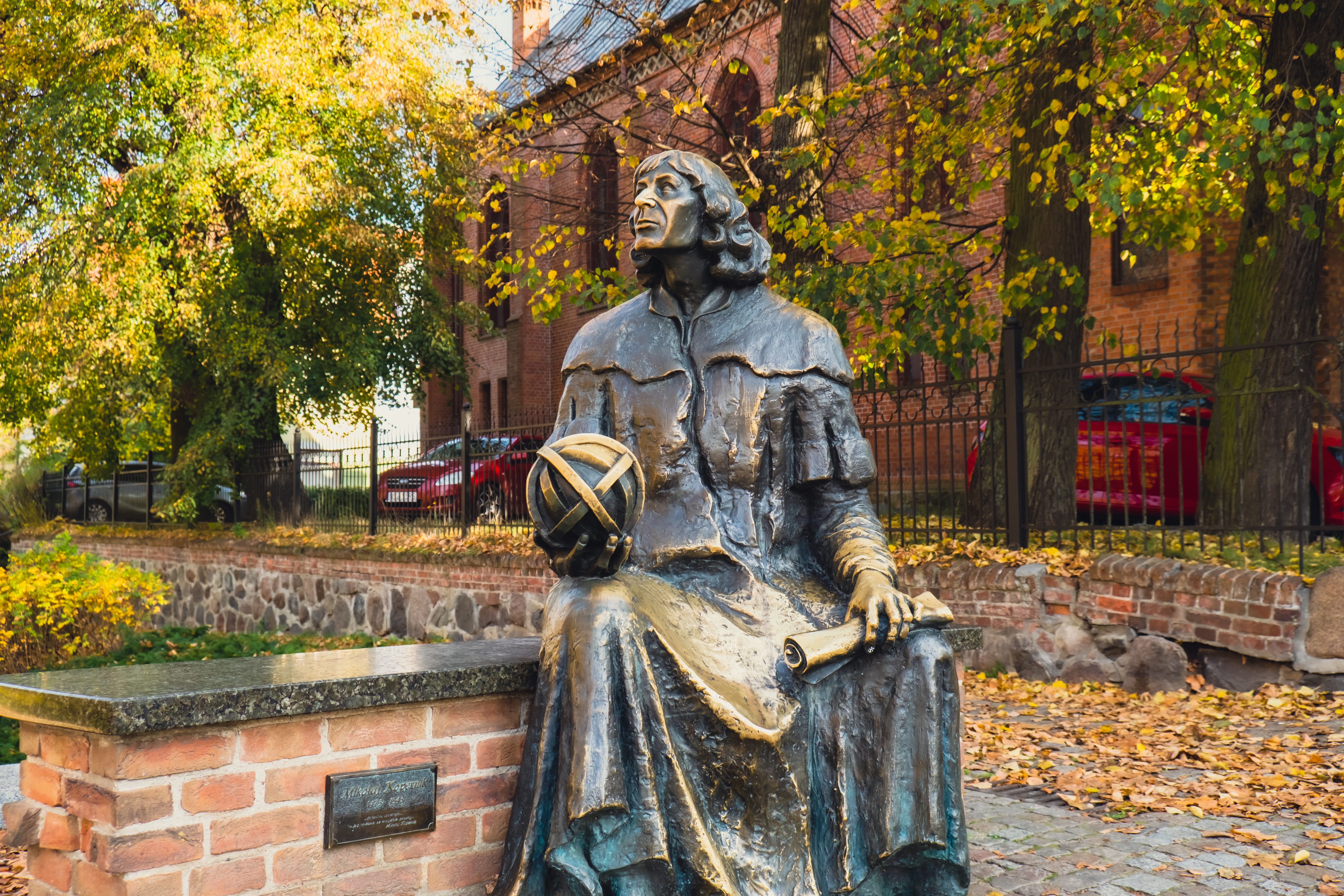
In the sixteenth century, Copernicus did more than revise a mathematical model. As a committed churchman, he revealed a fundamental error: humanity is not the center. For generations, people believed the cosmos revolved around us. Copernicus challenged this view, requiring a complete rethinking of our place in the universe. The earth is not the fixed point; it is dependent, held in orbit by a force beyond itself. The sun is the center and source.
A similar question lies at the heart of ultimate reality: the distinction between Creator and creature. God is the source and center of all being, while we are contingent and dependent. The key question is whether you see God as a character in your story or recognize yourself as a creature within His.
This distinction is significant. If you see yourself as the protagonist, God is reduced to a supporting figure who serves your personal goals. This perspective often leads to forms of faith such as the prosperity gospel, moralistic therapeutic deism, spiritualized self-help, or cultural Christianity that offers sentimentality without true commitment.
In contrast, when God is the protagonist, we are finite and dependent, called into a story centered on His glory, kingdom, and victory. Our purpose is to serve, glorify, and enjoy Him. This difference is fundamental.
This distinction is not about denomination but about our understanding of reality. Whether you are Roman Catholic, Baptist, Presbyterian, Anglican, or Pentecostal is secondary. The essential question is which story you inhabit. There is only one true narrative: the story of the Kingdom of God. You are either aware of it or not.
The Book of Common Prayer puts the matter directly. Before the water, there are questions: “Do you renounce Satan and all the spiritual forces of wickedness that rebel against God? Do you renounce the evil powers of this world which corrupt and destroy the creatures of God? Do you turn to Jesus Christ and accept him as your Savior? Do you put your whole trust in his grace and love?” But these questions are not uniquely Anglican. Gospel-centered traditions ask the same essential question: Are you intentionally leaving one kingdom and entering another?
The Antithesis
Scripture presents human history as a tale of two cities, two seeds, two humanities. St. Augustine saw this with devastating clarity. In his City of God, he traced the two cities from Cain and Abel to the fall of Rome and beyond: the city of God, ordered by love of God, and the earthly city, ordered by love of self. These cities are intermingled in history but utterly opposed in origin, allegiance, and destiny. Augustine was not inventing a new narrative; he was reading Scripture. The antithesis begins in Genesis 3:15 with God’s declaration of enmity between the serpent’s offspring and the woman’s offspring. It continues through Cain and Abel, through Israel and the nations, through the prophets and the false prophets. Our Lord Himself drew the line with uncomfortable clarity: “You are of your father the devil” (John 8:44). Apostle John wrote that “the whole world lies in the power of the evil one” (1 John 5:19). Apostle Paul announced that God “has delivered us from the domain of darkness and transferred us to the kingdom of his beloved Son” (Colossians 1:13).
This is the language of antithesis and redemption, not therapy: exodus, regime change, cosmic rescue. Transfer implies a previous location; deliverance implies captivity. Entering a kingdom means you were once outside it, or even in opposition to it.
The great antithesis runs through all of Scripture: the fundamental opposition between the kingdom of God and the kingdom of this world, between the wisdom of the King and the wisdom of the deceiver, between those being saved and those perishing. There is no neutral ground, no spiritual Switzerland. “My kingdom is not of this world,” Jesus declared (John 18:36). To become a Christian is to cross over.
No Accidental Christians
The reality is that there are no accidental Christians.
You do not drift into a kingdom or cross a battle line unknowingly. Saving faith is intentional, covenantal, and rooted in the story of redemption. As Augustine wrote, “He who made you without your consent does not justify you without your consent. He made you without your knowledge, but He does not justify you without you willing it” (Sermon 169.13).
You must understand, at least in outline, the narrative you have entered: God created all things good, humanity rebelled, the Creator became King and Redeemer, He is renewing all things, and you are called from one realm to another to serve His redemptive purposes until He returns.
This understanding does not require formal theological education. The thief on the cross had no catechesis, yet he recognized that Jesus was a King with a coming kingdom and that he was a sinner in need of mercy. “Remember me when you come into your kingdom” (Luke 23:42). This single sentence captures the Gospel: a King, a kingdom, a sinner, and a plea. The thief was not a theologian, but he understood whose story he was entering.
What is required is orientation. You must recognize that your allegiance has changed. Even a child may not understand theology, but she knows the difference between home and exile. She must know there is a distinction.
The Shape of the Story
We know this story not through speculation or imagination, but through revelation. Scripture is not a collection of spiritual insights; it is the King’s authoritative word, revealing the drama we have entered and our role within it.
The narrative of Scripture follows a pattern: creation, fall, redemption, and restoration. The good King created a good kingdom, but humanity rebelled, bringing darkness. The King initiated rescue through covenant, promise, Israel, and ultimately His incarnation. The Son overcame evil through the cross and resurrection. He now reigns, gathers His people, and will return to complete the kingdom. Every knee will bow.
This is the story: not a denominational one, Baptist, Catholic, or Anglican. But The story. If you do not know it, you do not know what you have been saved into. And if you do not know what you have been saved into, it is worth asking: have you entered the Kingdom at all, or have you simply layered religion over an unchanged life?
Conclusion
Clueless Christianity is no Christianity, because Christianity is not a feeling, a preference, or a family inheritance. It is an entrance into the Kingdom of God, which necessarily means departure from the kingdom of darkness (Colossians 1:13). You do not stumble in by accident. You do not change flags without knowing there are two of them.
When you understand this, and see yourself as a participant in God’s Kingdom rather than a consumer of religious goods, everything changes. Your priorities shift, your behavior aligns with the King’s commands, your worldview is transformed, and your allegiance is reordered to serve the King of kings.
So again: What kind of Christian are you? The answer depends on whether you know the story. And, more fundamentally, whose story it is.
I would argue, though, that the pre-copernican had a better idea of not being at the center. Being at the center of the cosmos was not a good thing—it was the place of change and decay. Read Dante. The Copernican revolution put the sun at the center of the physical cosmos but man became the center of everything else. Immanuel Kant did this specifically, as he thought we construct reality from within since we cannot know things in themselves.